Journey:
The journey from Cartagena to Isla Fuerte was our most complicated yet. Our bus was at 5:30am and we had to get to the bus station, which was about half an hour away, so this meant a very early start for us. The taxi drive cost about 20,000 COP and dropped us at TCC (Cartagena’s big bus station.) One guy immediately tried to helpfully take our bags and direct us over to buy our tickets, and it took us a while to point out that we already had our tickets, at which point he dropped our bags on the floor and walked back in search of clients who hadn’t already bought their tickets.
We were travelling with Expresso Brasilia and found the correct bus without a hiccup. We even for once didn’t have to pay extra for the surfboard (hooray.) The journey took about 4 and a half hours (costing 38,000 COP each) and was pretty smooth. Thomas spent the whole journey fast asleep and snoring (kidding.)
The bus driver dropped us at Lorica, in the middle of a very busy road with no taxi in sight. Several people, spotting the very obvious gringo meat we were, pounced on us offering lifts to Paso Neuvo (the port to get to Isla Fuerte) and having little alternative we accepted one and got in to the smallest car imaginable (with a surfboard this is no easy task) and I spent an uncomfortable 40 minutes with my arm wedged behind the boards. Another 40,000 COP later (this journey cost us a small fortune) we reached a tiny ‘harbour’ with several tiny boats that were maybe big enough for 10 people maximum.
The ‘captain’ of one of these boats offered us a lift to the island for 80,000 COP. Now if you read the details on the hostel website they say you can get a boat for 15,000 pp, so 30,000 COP for both of us, so we were pretty appalled at this price. We managed to negotiate down to 60,000 COP but they refused to take us for any less so short of camping out on the mainland until they caved (which might have worked to be fair) we had little choice but to take this option.
The boat ride was very ‘refreshing’ and ended in us being absolutely soaked, with some of our money also ending up rather damp. After being dropped on the other side it was a short walk to our hostel where we were greeted by a huge array of dogs, virtually no people, a lot of palm trees and generally a very pretty part of paradise.
Accommodation:
La Playita Hostel. There’s very few options for places to stay which means our choice was very easy. There were some expensive hotels and La Playita offered far cheaper options (being the only hostel on the island.)
We couldn’t quite stretch to a private hut here so we opted to sleep in hammocks, which was only 30,000 COP pp/pn. Now at first this is quite a novelty and actually quite comfy too. However, the negative is that the mosquito nets and mosquitos themselves are a pain. Trying to get into a mosquito net is really difficult and if you move too much when in the net you can hear the fateful sound of the net ripping a little bit. By the end Thomas had a massive hole in the side of his net and was being eaten alive by the mosquitos so had to duct tape it back up, I felt pretty smug as the holes in my net were underneath so didn’t leave any mosquito gaps.
The hostel itself was virtually empty, there were maybe 5 other people, but apparently it gets busier during high season. We enjoyed having the place to ourselves and using the sup boards and snorkelling gear. We did not enjoy the huge amount of chickens and cockerels who liked to venture into the sleeping area and cockadoodledoo in the ‘morning’ so loud that you either had a heart attack or almost fell out of the hammock.
The hostel was almost perfect but maybe requires a little more organisation, sometimes it was quite difficult to order food or ask for anything as nobody seemed to be around. It’s quite a new hostel so there’s still a little bit of tidying and bits of building going on too but overall it was a good place to stay.


Sights/activities:
The primary reason for us venturing so far off the beaten tourist track was for the surfing. Isla Fuerte is said to be the best place for surfing in Colombia.
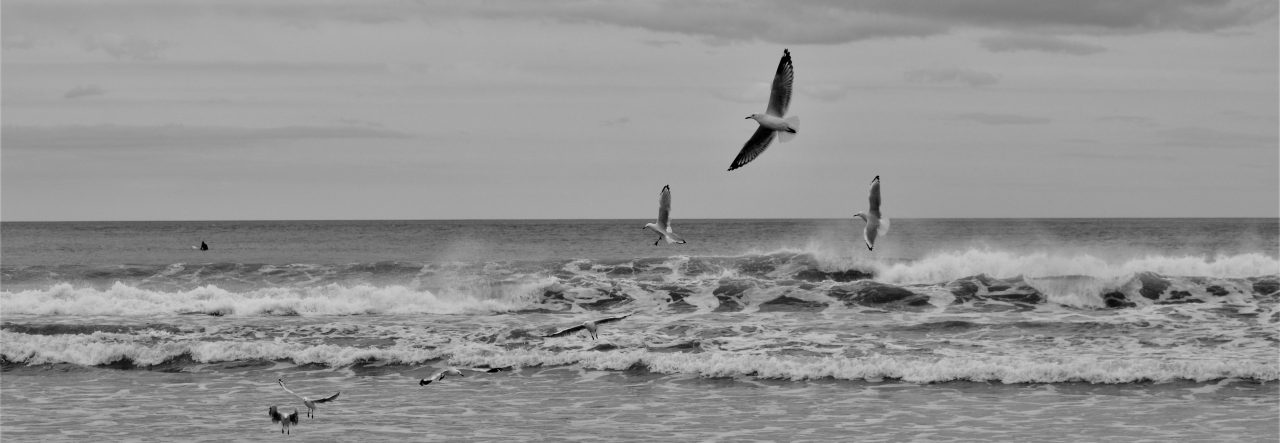
Unfortunately, for us this was not the case and the sea was comparable to a pancake (when I said the sea was as flat as a pancake Thomas thought I was very strange – maybe not a French expression – possibly should have said crepe instead.) Thomas was unable to surf even the tiniest wave and so was doing his depressed no surfing face for the first few hours on the island. Eventually he cheered up with some food and a nap (he’s like a toddler.)
Paddle boarding
One morning we took two paddle boards for a couple of hours and went to explore some other areas of the island. I’d never tried this before so resembled bambi trying to stand up for the first time, but eventually got the hang of it. We passed several empty buildings, no people except a few fishermen, saw plenty of fish and a tree filled with huge birds (probably with a wing span of about 1.5 – 2m.)
Thomas inevitably got a little bored as there wasn’t much adrenaline involved and played a new game of catching me up and pushing my board violently with his paddle until I fell off, or tried to jump on to my board (ending with us both falling off.) Eventually I decided to paddle most of the way back on my knees instead which was a lot more stable during attacks.


Snorkelling
Just in front of the hostel was a good spot for snorkelling and we saw some pretty fish in the reef. The water wasn’t the clearest but there had been a lot of rain which might have had something to do with this. Thomas really liked this activity as he liked pretending to be a shark.
Exploring the island
The island is quite small (3.25km square to be exact) so it’s easy to wander around. The houses are bright and colourful and the people are also very friendly. It’s very authentic and feels like a ‘real’ slice of Colombia as we were definitely not in a tourist zone.
In the centre of the village was a tree called ‘the crying tree’ and apparently is where the villagers go if they have a problem. The tree is huge and has an eye drawn into the trunk. We were followed out of the hostel by one of the dogs who took us on a little tour to this tree and through the village (she was very well behaved and a very informative tourist guide.) There were no cars and instead the traffic was made up of multiple donkeys wandering the streets. Love it.


Food:
There isn’t really much of an option here. There’s not many places selling food (but maybe there are more in high season.) Fortunately the hostel sells some good food and for not terribly expensive prices, (although after Cartagena nowhere was going to feel overly expensive.) We had the same thing for every meal, arroz con pollo, or chicken with rice (although when I attempted this in Spanish they had no clue what I meant – think the English accent really doesn’t help my pronunciation.) It was great especially with the mango juice. Even better was a lady selling fruit juice in the little town and she made us one with pineapple and mango which was incredible and probably double the size of the one at the hostel.
Also, when ordering food at the hostel be prepared for it to take at least an hour for food to come – seriously – I’m not sure why it takes quite so long when there are only 5 guests.
Summary:
Not many people venture out to this island. In the lonely planet or online there is nothing written about this island, but I’m not sure why. It’s a beautiful piece of authentic Colombia. Don’t expect it to be completely clean or perfect as that’s not what it’s about, instead it’s very real. It’s good to come and explore and relax for a few days (we slept a huge amount) and there’s some fun activities to keep you occupied, but it’s not a big place and after a few days you do run out of new things to see/do (although this isn’t always a bad thing.) We would definitely come back (but next time when there are actually some waves.)
 Wizz round the world