Journey:
We took another overnight bus to do the journey from Mancora to Trujillo. It cost only S.45 each and we were told it would take about 8 hours (it didn’t, 11 hours is more accurate.) This time the company was El Sol and the bus was definitely less luxurious than our last journey, but then again the price was a whole lot cheaper. After reaching the city of Trujillo we then took a taxi for S.25 to get to the beach town of Huanchaco, which was half an hour away.
Accommodation:
Frog’s Chillhouse Hostel. A really nice hostel overlooking the beach (we could see the sea from our room.) There’s a big kitchen and lots of communal areas. Also, they have loads of bikes you can use for free. Best bit: a lot less crickets. I mean there were still crickets and all but there were so much less.


Sights/activities:
Surfing
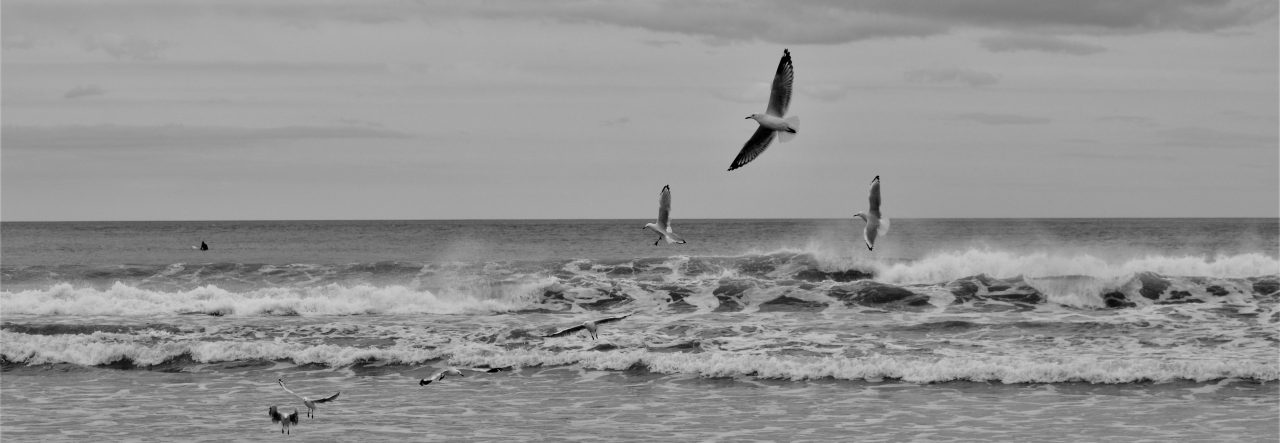
Another Peruvian surf town. The good thing about surfing in Peru is that the waves are fairly consistent. However, the downsides were that it was definitely wetsuit temperature; and also, the water was pretty dirty (Thomas picked up a stomach bug – most likely from the state of the sea water here.)


Chan Chan
The ruins of Chan Chan are located 15 minutes away. We took one of the many red buses circling Huanchaco – Trujillo and it cost us S.1.50 each. They dropped us at the ‘entrance’ and then there was quite a long walk to get to the actual entrance, maybe a 1.5km stroll into the middle of the desert (or so it felt like.) It cost us S.10 each to enter the Tschudi complex or Palacio Nik-An (the only one of the nine palaces are open to the public) but there had been some flood damage so not all of the ruins were open.
In short, Chan Chan had been the capital of the Chimu kingdom and about 600 years ago had been the largest city in the Americas, and largest adobe city on Earth (city made of mud bricks.) In 1470 Chan Chan was invaded by the Incas, and many of Chan Chan’s workers were brought to their own capital – Cusco. More recently, rainfall has led to the collapse of the remaining structures and although a roof covers a short section the city covers about 20km square and so at the moment it is currently dissolving from bricks to mud.
The ticket also includes entrance into three other sites. To do these we paid a taxi S.45 to take us to each and drop us off at our hostel in Huanchaco at the end. (I’m sure you could maybe do this using buses or something but I wouldn’t have a clue where to start with this.) These three other sites are: the museum and two temples. The museum is definitely not worth going to and the temples are very similar to Chan Chan, but are still interesting to look at as they’re free. (I wouldn’t pay for them separately though.) We also saw our first Peruvian hairless dog here, which I thought was quite cute and Thomas thought was disgusting.


Food:
In Huanchaco there are places doing the usual set meal (starter/main/drink) for S.15 (but you can negotiate them down to S.10.) Most of the time the starter will be ceviche (lemony raw fish with salad) which we’d tried in Colombia too and it’s surprisingly yummy. Also, this is the first time we encountered Inca Kola which is kind of like a cream soda, and found all over Peru. It’s another one of those surprisingly yummy finds.
Summary:
Huanchaco was a massive step up from Mancora. There were far fewer crickets for one and although it was only a small fishing village there was still more to see than Mancora. I wouldn’t go to this area especially to see the ruins of Chan Chan but if you’re there it’s definitely worth a visit. It wasn’t my favourite place so far in our travels but the town definitely had a little charm and was restoring my fairly negative view of Peru so far.
 Wizz round the world