Unawatuna

Journey from Weligama to Unawatuna:

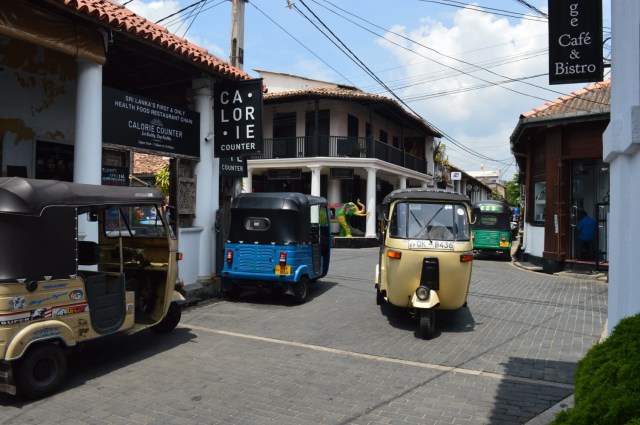
One of the most straightforward journeys we had. It was only a short tuk tuk ride to our next hotel for 1,500LKR. The journey took a speedy 30 minutes.

Things to do:

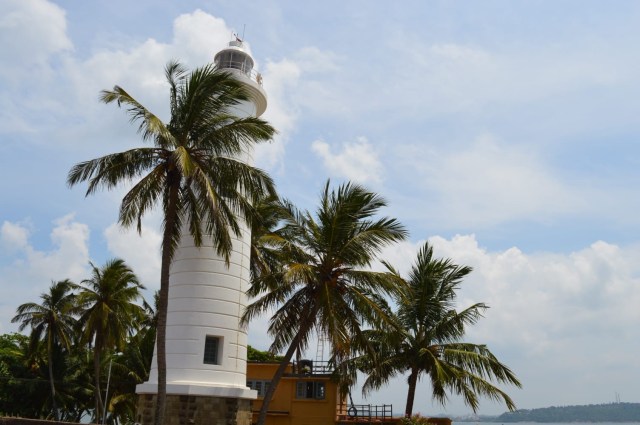
Galle Fort

A really beautiful town with lots of colonial architecture. The fort was first built by the Portuguese in 1505 and was later taken over by the Dutch in 1640 who made lots of fortifications to improve the fort up until the 18th century as it was used as their main base. The Dutch lost the fort to the British in 1796, but as the British used Colombo as their main base they paid little attention to Galle.

There are lots of historic buildings still set within the fort and the walls surrounding Galle are an impressive sight by themselves. There are lots of shops and cafes and is the perfect place to meander around for an afternoon.
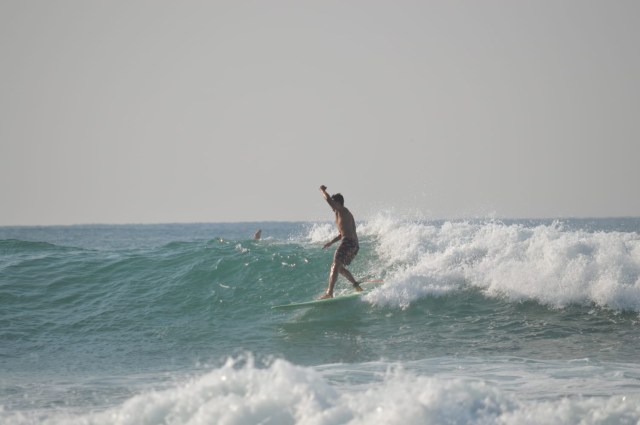
Surfing

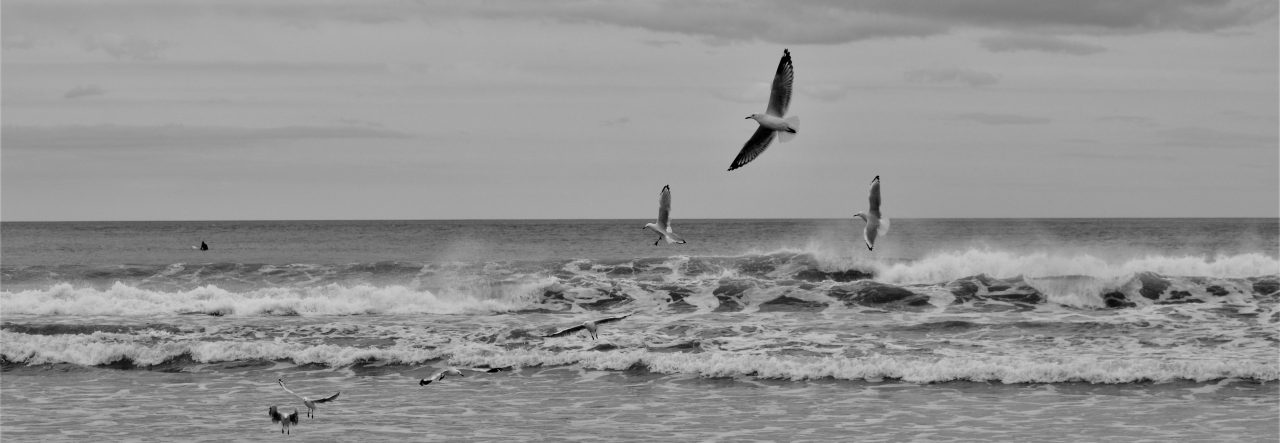
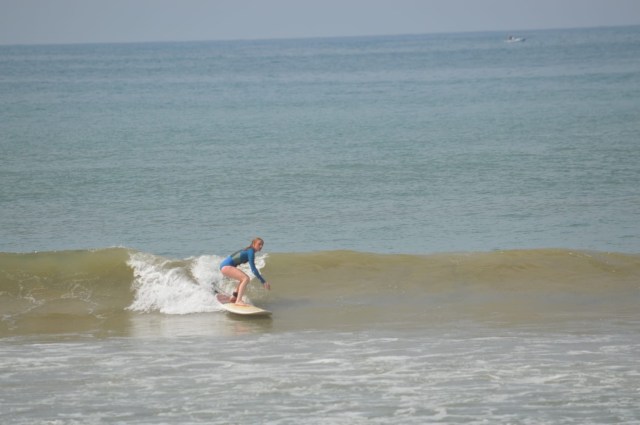
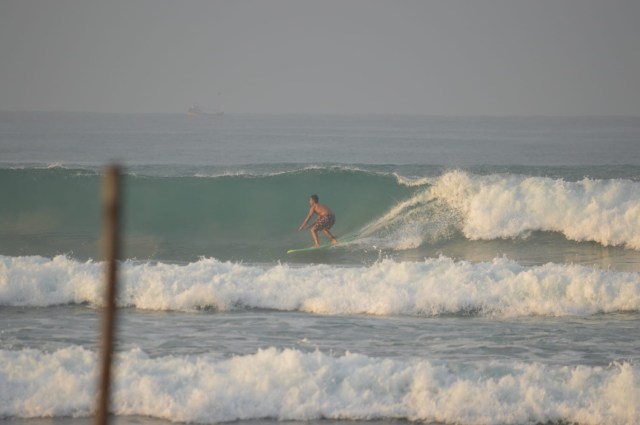
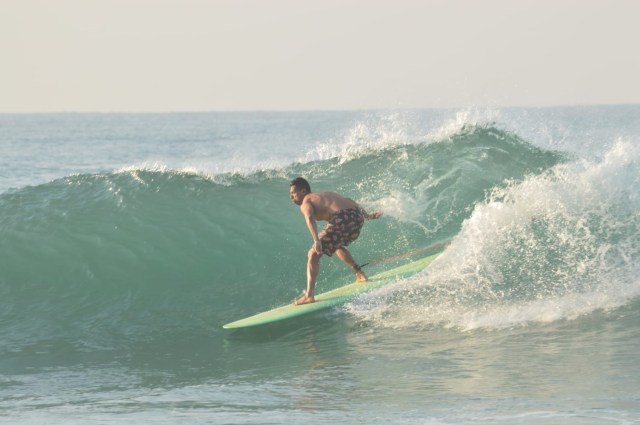
There were again lots of surfing spots in this area. Ahangama had several reef breaks for the more advanced, and the other way along the coast line heading back towards Galle had Bonavista Beach which was perfect for the beginner to intermediate level surfer.
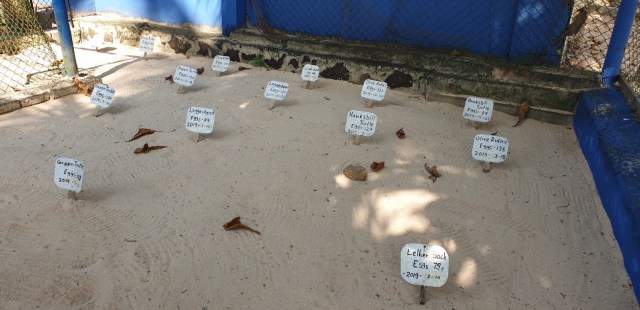
Habaraduwa Sea Turtle Hatchery

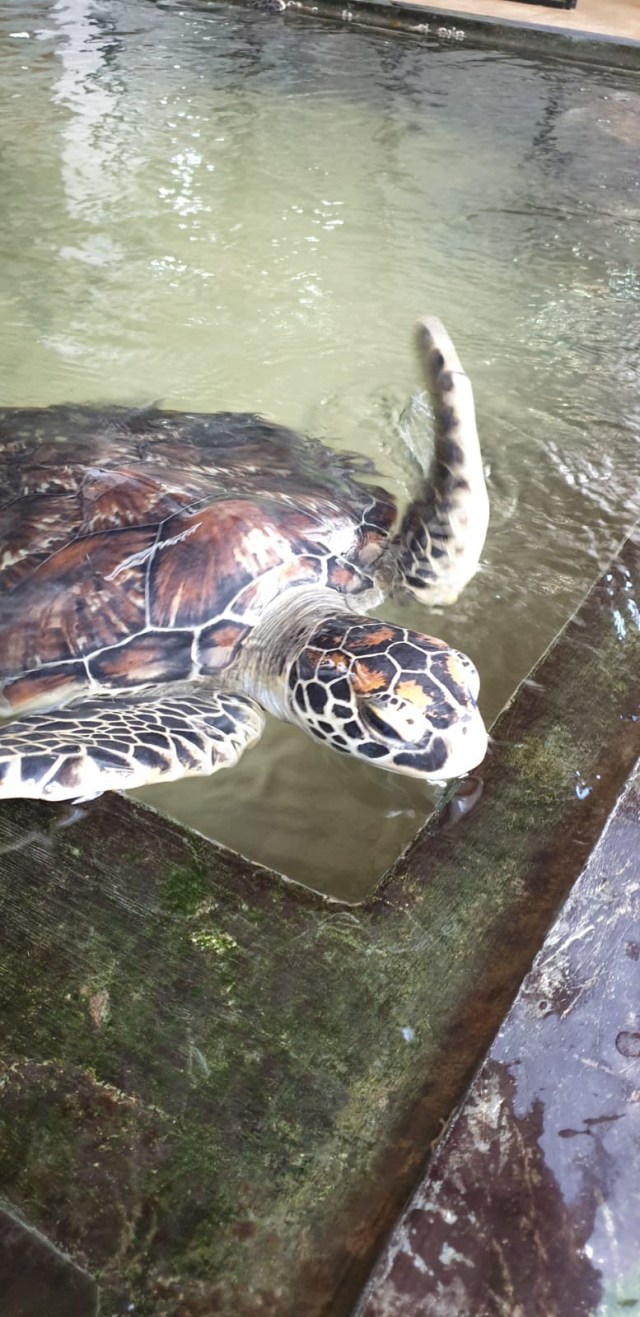
Sea turtles come to lay their eggs on Habaraduwa beach. The hatchery protects the eggs from potential predators/being stolen by people. Once the eggs hatch the baby turtles are kept until that evening or for a couple of days and then set free into the ocean. We saw some baby turtles that had hatched the day before and were about to be set free. They were absolutely tiny!

The hatchery also has a few bigger turtles. There were a couple of fully grown turtles that had sadly lost their fins in motor boat accidents but they were hoping they would soon be strong enough to set free again. There were also a few hawksbill turtles as this type of turtle is often killed due to its beautiful shell and so they are trying to increase the population by keeping them in captivity until they are a bit stronger and more likely to survive the wild.

It cost 500LKR per person and although it was very small and you are there for maybe half an hour at the maximum, it’s interesting and it’s amazing to see the turtles at such close proximity.
Jungle beach

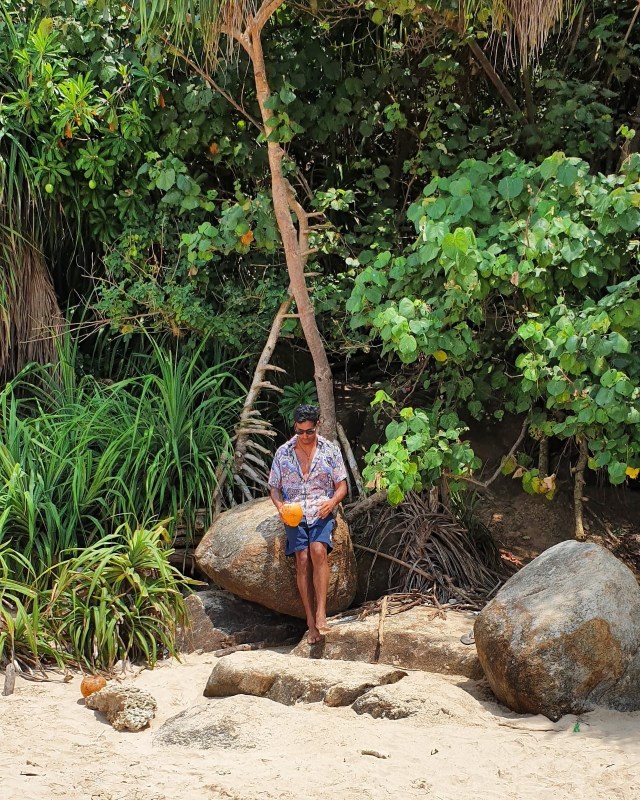
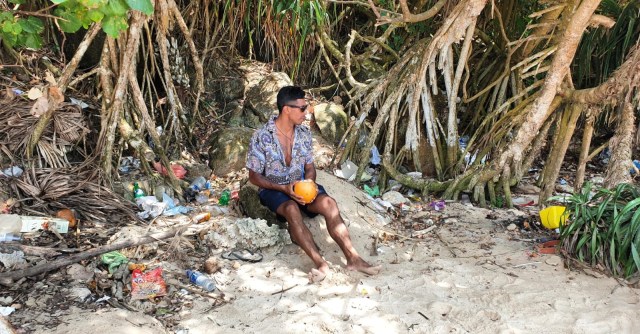
Before we went I had read that this beach was a must to go to as it was very beautiful. We disagreed. It was far too touristy for our liking and the amount of rubbish on this beach was appalling. Perhaps if it was cleaned up and there was nobody else there then it would be a very nice beach but I doubt either of those things are going to happen. See below for what the beach could look like versus what it actually looks like…
Where to stay:

Lara’s Place

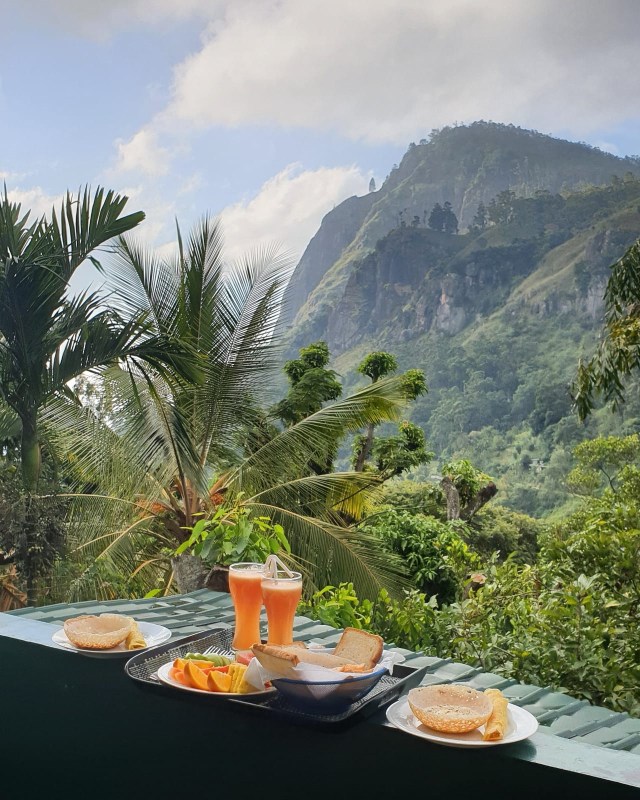
I think this was our favourite hotel. Just outside of Unawatuna there is a small turning leading up into the hills. There were very few rooms but I think all of the rooms had the same beautiful sea view. The Sri Lankan breakfast was absolutely incredible and definitely one of our highlights.

Where to eat:

Mati Gedara

There is a street in the centre of Unawatuna running down to the beach which is home to all the restaurants and shops. Just off this Street was Mati Gedara which did an all you can eat authentic Sri Lankan curry for only 350LKR per person. You also had the option of choosing some freshly caught fish for them to cook for you. Only downside was the food was a bit cold, but other than that for the exceptionally cheap price it was a great find.

The Nest

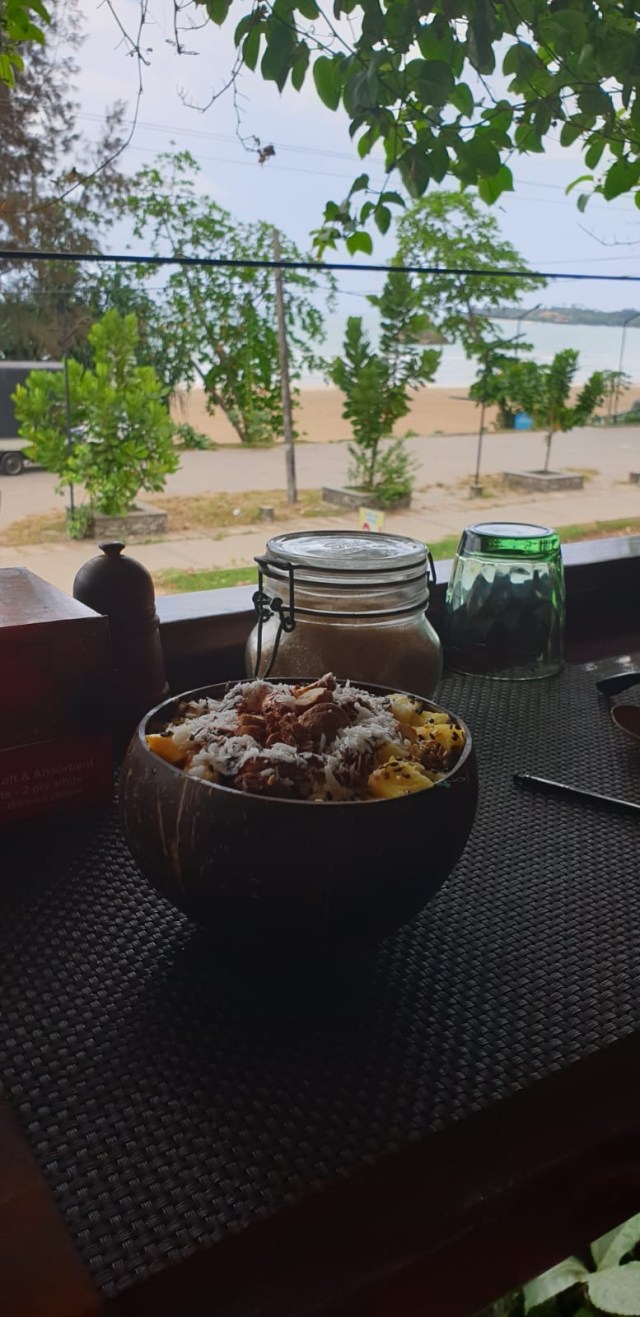
This one was in Galle Fort and doubles up as a clothes/souvenir shop. Had some very good smoothie bowls here and they had a good variety of flavours. It was a lot cheaper than where we had been in Weligama too at only 550LKR a bowl.

Blue Caffeine

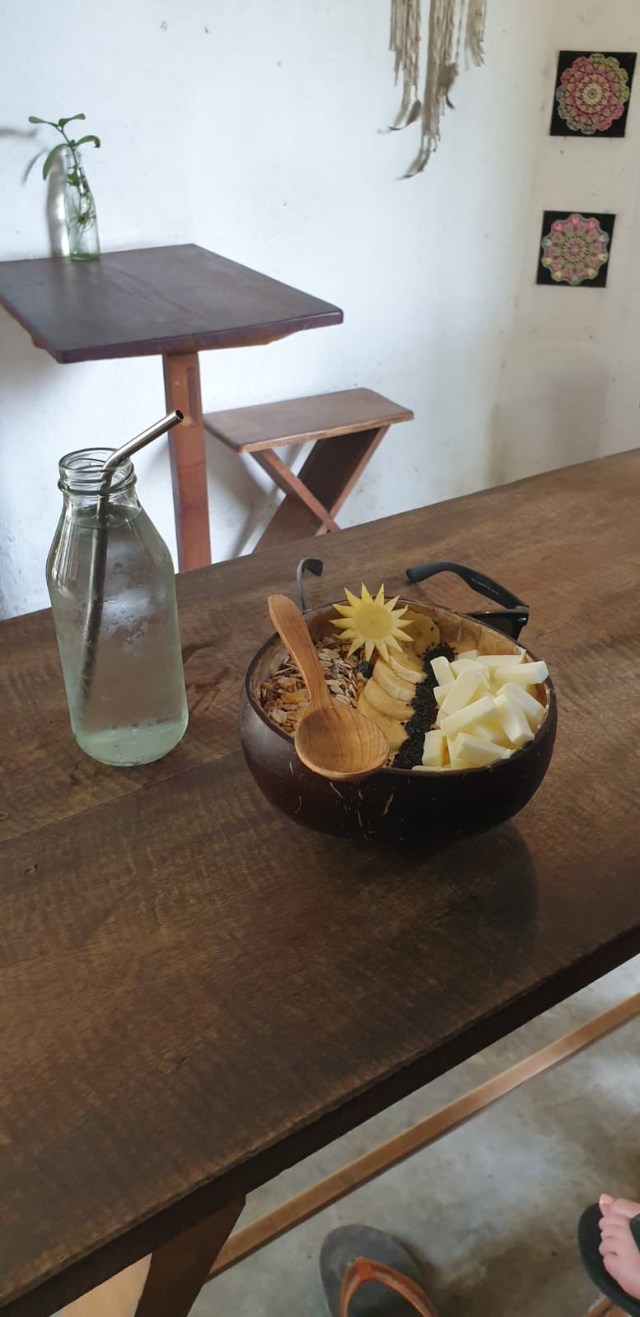
The first cafe off the main road and on to the street going to the beach in Unawatuna. Probably our favourite smoothie bowl which was called Tropical Paradise.
Beach Front Restaurants

There are loads of restaurants that have tables on the beach so you can sit and listen to the sea whilst you eat. Complete with a cute candle on the table. However, very overpriced and very average food. Tourist central too – one girl kept sending her pizza back because it was not up to her standards. It is absolutely baffling why you would come to Sri Lanka and order pizza and not have any of their local dishes which will obviously be far tastier as it is food they know how to prepare very well.
Unawatuna is a lovely spot. It is maybe a bit more touristy than Weligama which is probably to be expected being so close to Galle. Our hotel was perfect as it was a tiny bit outside the town so you avoided the main tourist area and also had fantastic ocean views. Also we can’t stress enough how amazing the breakfast was here. I would return in an instant just to be able to eat this breakfast again.
Weligama

Journey from Udawalawe to Weligama:

We were told by our hotel we would need to take 2-3 buses to get to Weligama so we plodded to the bus stop and waited in the baking heat. Unsurprisingly within 5 minutes a tuk tuk pulled up asking where we needed to go. He told us his ‘taxi driver friend’ was in Udawalawe dropping off some people and would be going back towards Matara as that’s where he lived and so could give us a good rate. At only 3,500LKR for a 2 hour journey straight to our hotel it was definitely a stroke of luck and far more comfortable than changing buses 3 times (and we were far less likely to die judging by the driving of the buses!)

Things to do:

Surfing

There are lots of surfing points nearby. Midigama, the next town further west, is probably better for the slightly more advanced – there are several different spots: Plantation Point, Ram’s Point, Lazy left and many more.

Weligama bay is perfect for beginners and intermediates and there are plenty of places to rent a board/go for a surf lesson.

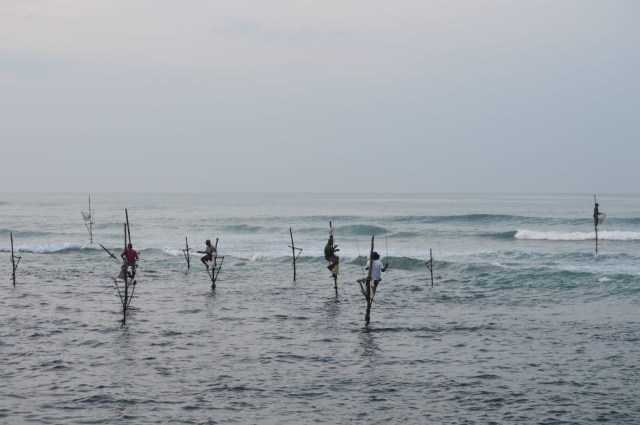
Weligama stilt fishermen

All the way from Matara to Unawatuna along the coast there are lots of stilt fishermen. This is their traditional fishing method but it is not so widely used anymore and some areas of the stilt fishermen are a little more aimed at tourists. For instance, at some of the spots if you want to take a photo they ask for a donation. We even saw one spot where tourists were trying to sit on the stilts!

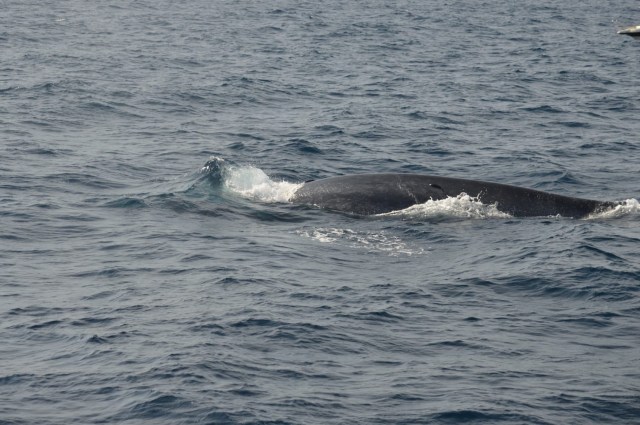
Mirissa whale watching

Our hotel organised this for us and gave us the rather vague instruction to go to the first ticket office and ask for a name at 6am. This was a little confusing as the ticket office wasn’t overly clear but fortunately someone pointed us in the right direction. The boat was big enough for 70 people (although there were probably more like 30 on our boat) and it cost $50 per person. This was more than I was expecting but apparently the government have recently put further regulations on whale watching in Mirissa so the price is higher and there are fewer people allowed on the boats which is probably a good thing.

The boat was fairly rocky but in mind of this I had already taken a pill for sea sickness (and they were handing them out before we left), we were provided with some very unimpressive breakfasts and our journey began. We had to travel about an hour before we were in range of where the whales were and then it was a matter of waiting for one to surface. When a whale did eventually surface the boat would try and get as close as possible to it but this was not always easy as obviously whales are pretty quick swimmers. There were a lot of boats trying to spot whales but they were not too on top of each other, as we’d heard they were previously, so maybe the new regulations have succeeded in limiting the amount of boats which was good.

We were fortunate enough to spot several whales a couple of which were very close to the boat. You are only able to see the whales for a very short amount of time as they only surface for maybe a minute or two before diving back under the water. It was still amazing to see these animals up close though and on the way back we were also lucky enough to spot some sea turtles.

Where to stay:

Neptune Eco Villas

Another lovely hotel! Each villa was huge and had the added bonus of a kitchenette which was handy as then you could make a few of your own meals. The staff organised a scooter for us for 1,200LKR per day and helped us sort out the whale watching trip. We haven’t had a bad hotel the whole trip!

Where to eat:

Baba’s Rotti Shop & Restaurant

Nestled behind the main coast road sits the more local restaurants. We had a great Kottu and Sri Lankan curry buffet (I paid 500LKR and was allowed to fill up my plate as many times as I wanted – bargain!) It was completely empty but we had no idea why as the food was great and it was very cheap.

Aloha

Expensive but you get a good view of the sea and the smoothie bowls are great (but at 900LKR per bowl they had better be!)

Where not to eat:

Chef Akilla’s Restaurant

Big disappointment. This restaurant was recommended by our hotel as somewhere to go for local food. It had a great view but unfortunately the food wasn’t good and it was expensive. Worst part was one of the staff chucked rubbish from one of the tables straight down the side of the cliff. Sri Lanka has a big problem with rubbish and seeing how careless they were with disposing of their waste was really alarming.

The beaches surrounding Weligama were beautiful. However, there was perhaps a slightly greater issue here with rubbish and the coast line was littered with waste. This aside we loved the area and would definitely come back.

Udawalawe National Park

Journey from Ella to Udawalawe:

We asked our hotel how to get to Udawalawe by bus and were told this would involve between 2-3 changes so in the end we decided to treat ourselves and get a taxi for the whole 2 hour journey from Ella to our hotel in Udawalawe. This cost us quite a bit at 7,000LKR but was a very straightforward journey.

Things to do:

Safari

The reason you got to Udawalawe is for the safari. There isn’t really any other reason (that I am aware of!) We had booked a half day safari through out hotel starting at 5:30am and finishing at about 11:30am. This cost about 8,500LKR for a jeep and driver for 2 people (although the jeeps can all fit 6) plus 4,200LKR per person for the entrance fee into the national park. There are jeeps waiting outside the park if people prefer to get to Udawalawe themselves and organise their own jeep, and the price for one of these jeeps is probably more negotiable.

Although the morning safari technically starts at 5:30am the first hour is actually just sitting waiting outside the park gates. There is then a mad dash as all the jeeps start racing to be the first in and be the first in the queue to get the tickets. The first elephant we saw was near to the entrance and therefore there were us plus twenty other jeeps crowding around one elephant which wasn’t exactly how we had pictured the safari. However, after about half an hour all the jeeps had spread out and so we were on our own for the rest of the safari.

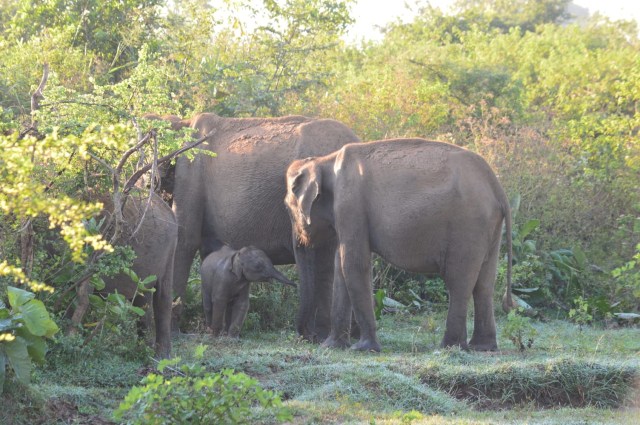
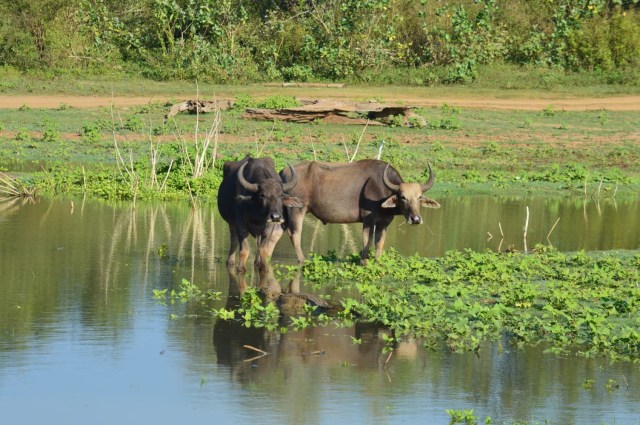
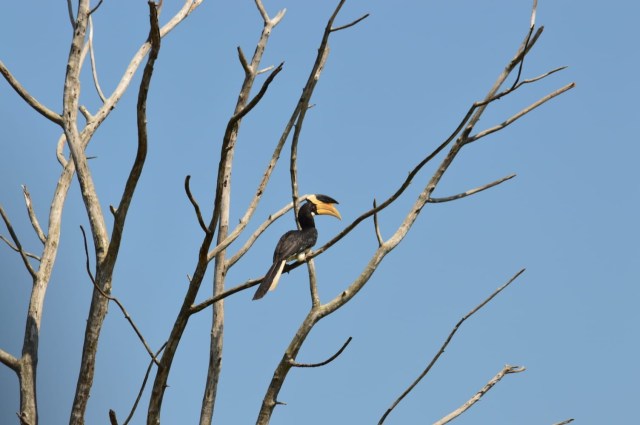
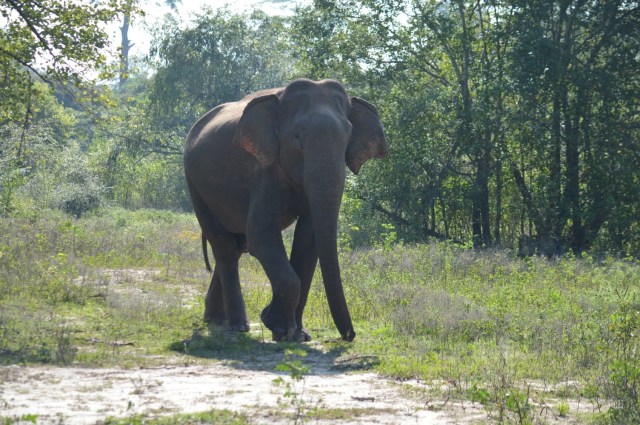
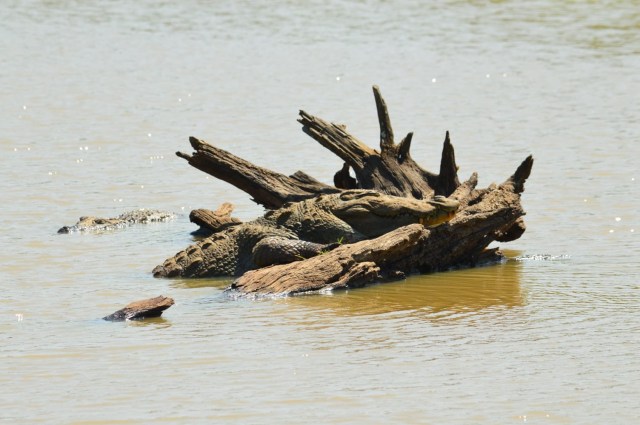
We were lucky enough to see lots of elephants (including a 2 week old baby elephant), crocodiles, buffalo, huge numbers of different birds (eagles, peacocks, kingfishers) and a couple of lizards and turtles too. A rather unimpressive breakfast was also provided by our hotel but was given to us at a beautiful spot overlooking the water. A safari is definitely a must do if you like animals (if you’re not an animal lover this is obviously not going to be your cup of tea.)

Where to stay:

Kottawatta Village

Very beautiful hotel with a lake in the middle. There were also 2 swimming pools and the rooms were massive. They also provide a buffet for supper although we decided against this as it was $10 per person which seemed a bit steep. The different room types vary in price quite a bit, we paid $63 for a deluxe room. I’m glad we organised the safari through the hotel too as the driver was very good at spotting different birds that I would have never even noticed.

Where to eat:

We had decided the buffet was a bit pricey so walked the 400m into Udawalawe. There wasn’t a huge amount of choice as the town isn’t very big and we ended up having definitely our worst meal in Sri Lanka here at a very odd restaurant that had lots of flashing lights everywhere. Maybe should have just stayed at the hotel on this one…

Udawalawe National Park is absolutely huge and filled with so much wildlife! Don’t be deterred by the huge amount of jeeps at the entrance they very quickly spread out and soon it will be just you, your driver and a couple of elephants.

Ella

Journey from Adam’s Peak to Ella:

As soon as we reached our hotel after climbing Adam’s Peak we took a tuk tuk for the hour drive back to Hatton train station (costing 1,500LKR.) We then bought second class unreserved tickets for the train from Hatton to Ella.

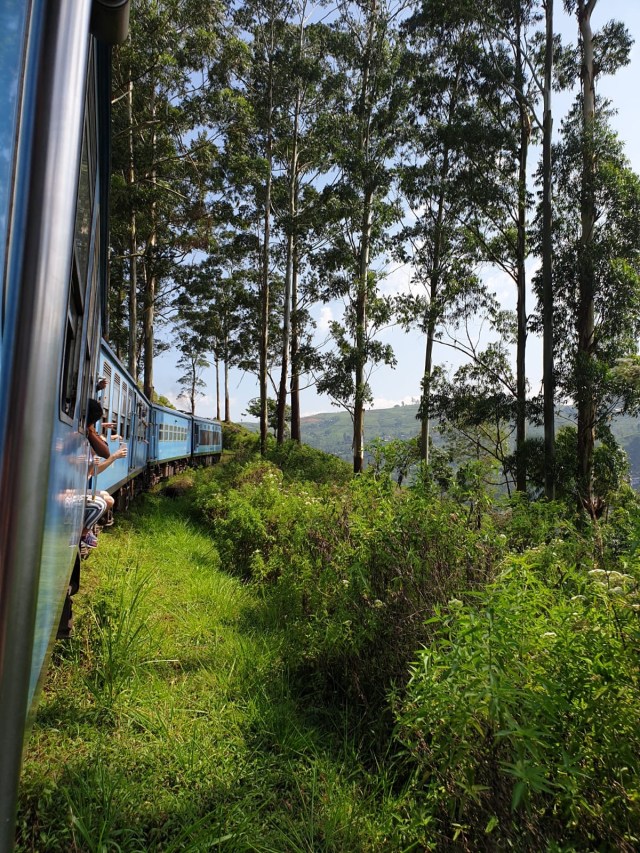
Unfortunately, the train had far too many people squashed into it and what had been described as one of the most scenic journeys in Sri Lanka turned out to definitely be our worst journey in Sri Lanka. Unless you have tickets for one of the reserved carriages it’s just not worth it. Rather than views of beautiful scenery I became very well acquainted with several unwashed backpackers armpits for 4 hours. Especially just after climbing Adam’s Peak this journey was particularly exhausting and we wish we had found an alternative option. The upside was that this was very cheap at only 200LKR per person.

Things to do:

We only had one day in Ella so decided to hire a scooter to see some of the nearby sights. This cost us 1,500LKR for the day and was probably cheaper than getting a tuk tuk to each of the places. Ella is beautiful just to drive around and if you can get as high as possible you can get some amazing views.

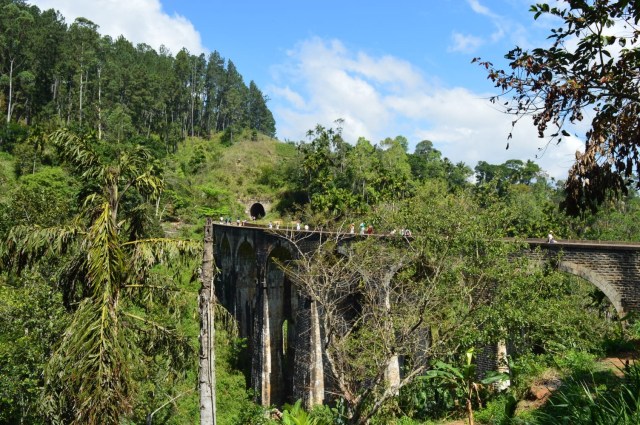
Ravana Falls & Nine Arch Rail Bridge

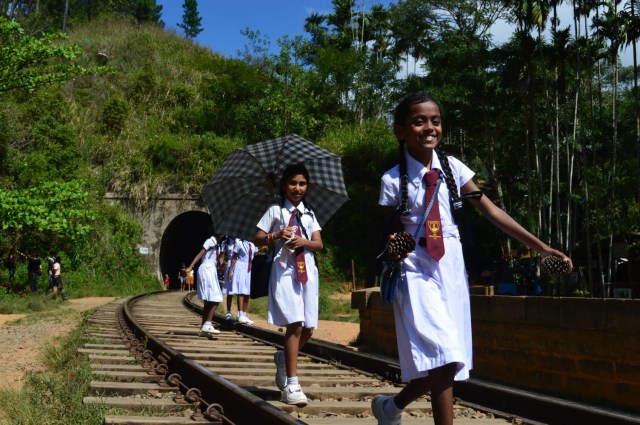
Beautiful sights, spoilt by the huge numbers of tourists. Still worth seeing.

Ella Rock/Little Adam’s Peak

We had too short a time in Ella so didn’t get to do either of these but on the to do list for next time. Don’t think our legs could have coped with any strenuous walks after climbing Adam’s peak the previous day.

Where to stay:

Country House

A bit confusing to find and the tuk tuk driver took us to Country Homes instead of Country House (although they are right next to each other so it was fine.) The views from our balcony were amazing and having (free) breakfast on the balcony in the morning was a definite highlight.

Where to eat:

Fish & Chips

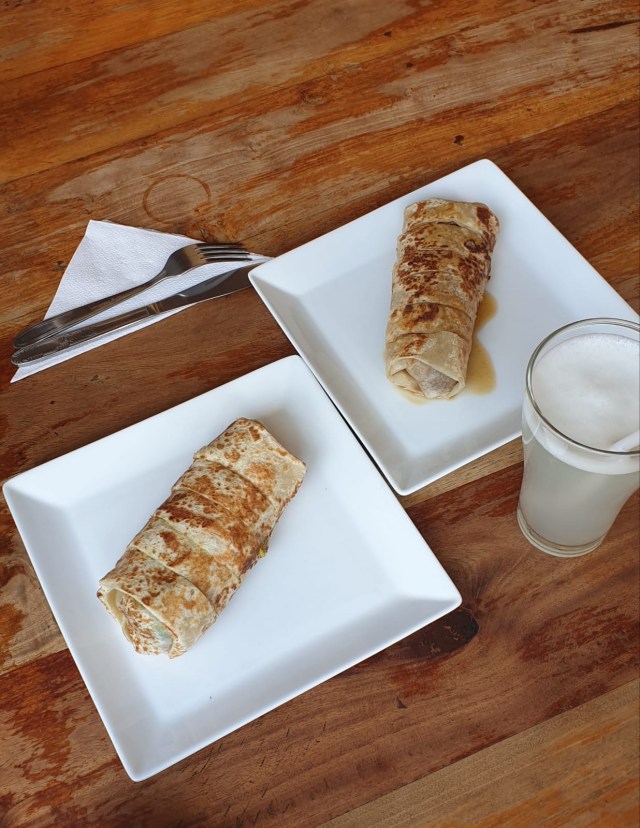
Ella is tourist central so it is quite hard to find anywhere doing local food for cheaper prices. You will find most people in Chill Restaurant & Bar but it is very overpriced so we walked a little further down the street and found Fish & Chips (we also hired a scooter from them). The food there was very good and far cheaper than some of the restaurants. The coconut and honey rotti was definitely a firm favourite.

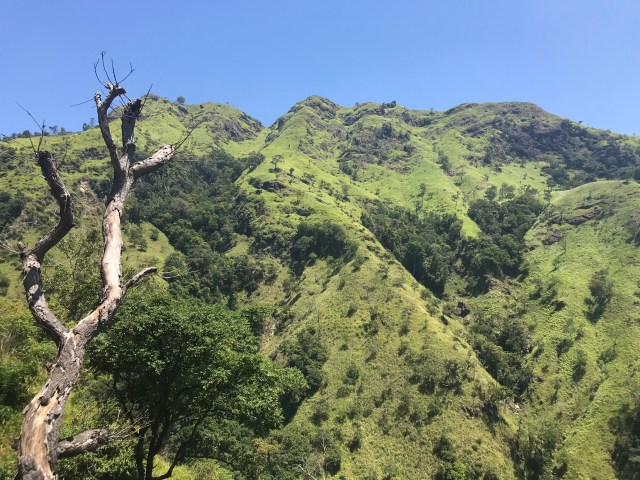
Ella is undeniably one of the most beautiful spots we went to. However, it is spoilt a little by the huge number of tourists there. Each of the sights we went to were crowded with so many backpackers which was a shame but still the amazing views mean you can understand why tourists flock here. We didn’t have enough time in Ella you would probably need at least 2-3 days.

Adam’s Peak

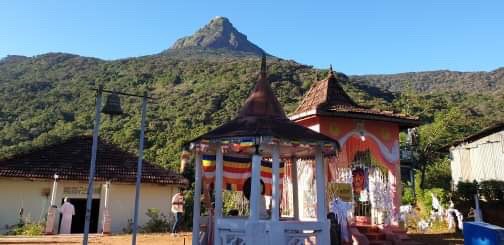
Adam’s peak is a 5,500 step climb and most people aim to climb through the night to make it to the top for sunrise. It was tough but still manageable. There are lots of Sri Lankan’s climbing it barefoot and some of them are over 70 years old! If possible avoid climbing Adam’s peak on a full moon, this is an important religious day for Sri Lankan’s so there are lots of people climbing at this time. We had fortunately just missed the full moon but were told some people had started at 10pm and not managed to reach the top because there were too many people when they had attempted the climb on a Poya Day!

How to get to Adam’s Peak:

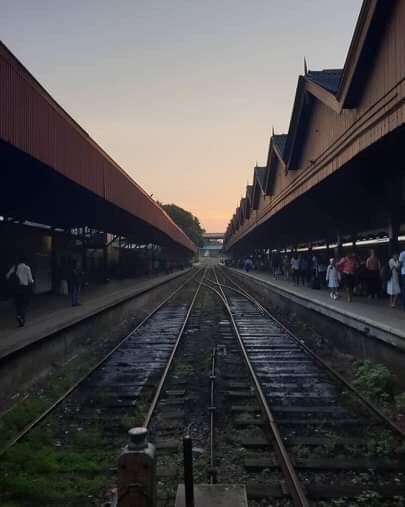
We were coming from Kandy so we took the train from Kandy to Hatton. We paid for second class unreserved tickets which cost 150LKR per person, which is 63 pence a ticket! From wherever you are you will probably need to firstly get to Hatton as it is the closest town with easy transport links. This train journey was absolutely stunning and although it was very full we were lucky enough to get a seat near the open door and therefore had incredible views for the whole 2 hour journey, which was probably one of our highlights of the trip. Although if you are not lucky enough to have a reserved ticket or space by a door the journey is far less enjoyable!

Once in Hatton you could take a local bus, the cheapest option, to the town of Dalhousie, where the start of Adam’s Peak is. However, we decided to take a tuk tuk instead as it wasn’t too expensive at 2,000LKR for about an hour long drive. We were in the tuk tuk for less than 2 minutes before being ushered into a car for some unknown reason but we were assured this was the same price as the tuk tuk so hopped in. 5 minutes later the driver of the car said that it would be 3,000LKR and not prepared to pay that amount when there were plenty of cheaper alternatives we asked him to take us back to the station where we could then take a tuk tuk or local bus instead. I think he thought we were just driving a very hard bargain and so in the end agreed to take us to Dalhousie for the ‘very special price’ of 2,000 mLKR.

It turned out to be a very strange journey as the taxi driver then proceeded to tell us lots of tales of how terrible our hotel was and how the owner of the hotel was stealing everyone’s money and also stealing his job. We think he had a bit of a grudge with the hotel owner but we experienced no problems at all with the hotel.

Where to stay:

Grand Adam’s Peak Hotel

Although the taxi driver tried his best to put us off this hotel we thought it was good for a one night stay. You’re not exactly spending a huge amount of time in your hotel so don’t really need anything fancy. The room was clean, there was a pool (where some rather aggressive toque monkeys liked to hang out), and the food was good too if a little pricey. One night cost $39.60 for a double room, although they tried their hardest to get us to upgrade to another room.

The climb:

Ascent

We left out hotel at 1:40am and walked through the centre of the town for about 10 minutes until we reached the starting point. The start is easy to find as everyone is going to the same place! There were a few others also setting off now but I think the majority start between 2 and 2:30am. As we weren’t sure what to expect we started a bit earlier although this was not really necessary (unless it’s a full moon) as we got to the top before sunrise and sat there shivering for an hour.

The first part is relatively straightforward, there are a couple of steps followed by flat ground, a few steps, more flat ground and it repeats like this for a while. You pass through lots of places selling snacks and tea so it’s easy to pick up water and food on the way.

Maybe at about half way the climb suddenly gets a lot more intense. There is no flat ground in between sets of steps anymore and the steepness of the steps gradually increases. As you get closer to the top the steps also become narrower as well as more steep so you end up in a bit of a queue, so it’s easy to see why when it’s busy people struggle to make it to the top for the sunrise.

The top

At the top there is a small temple which we bypassed as the queue to get in was very long. Also we didn’t really fancy removing our shoes at this point as it was absolutely freezing. There is a lot less space at the top than I was expecting so it’s quite tricky to get in a good position for the sunrise. We were there at about 4:30am and had stopped a couple of times so as long as it’s not too busy it doesn’t take longer than between 3-4 hours to reach the top.

Whilst you are climbing you don’t notice the cold but when you stop you realise that the wind is very very very cold. We were definitely not prepared for this. There were several smart people that had even bought sleeping bags with them! Bring layers. Lots of layers. And a hat.

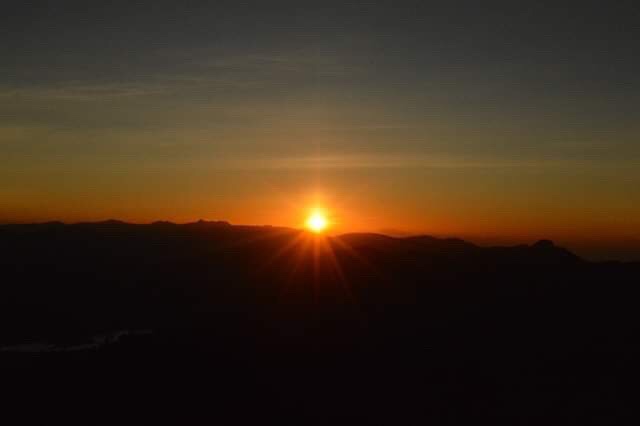
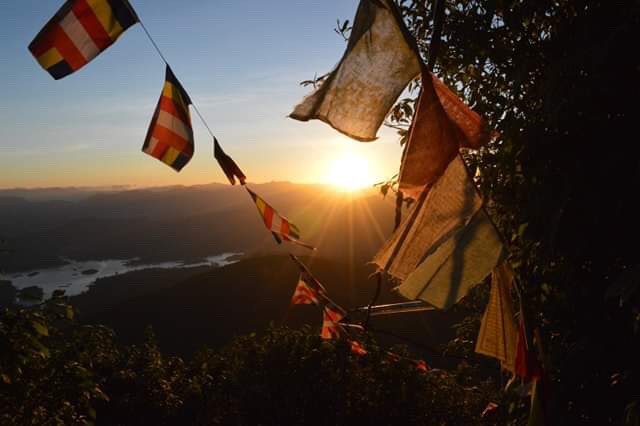
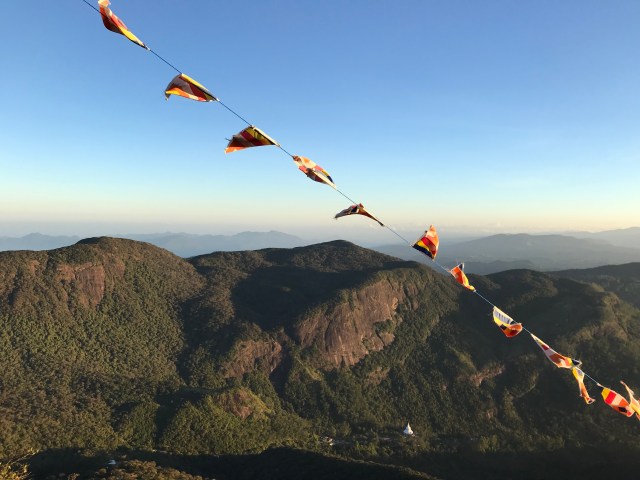
Everyone is there for the sunrise so as soon as the sun starts peaking over the horizon there is a mad dash as everyone tries to get a spot to see it. I would definitely recommend climbing down a little bit at this point because you can actually get a good view of the sunrise rather than a view of heads/cameras and also you are then a bit ahead of the crowd that will all be trying to come down the steps at the same time.

Descent

Probably the hardest bit of all was going back down. Our legs were feeling like they were made from jelly and each stair jolted your leg. Definitely very easy to fall down some steps at this point.

Adam’s Peak is amazing! I would climb the 5,500 steps again a hundred times over to see the sunrise view despite the severely aching calves for the next week.

Kandy

Journey from Colombo to Kandy:

We took a taxi from the airport to Colombo Fort train station, which took about an hour. This cost 2500LKR with an additional toll fee of 300LKR (if you go the more ‘scenic’ route the journey takes longer but you avoid the toll road.) I think the alternative choice is a local bus but by that point we were too tired to give this a go!

At the train station we paid for first class seats. This cost 1800LKR for 2 places on a very spacious, air conditioned carriage. The only downside was that you couldn’t open the train windows but this was only a very minor downside as the views were still incredible and the carriage had very good air conditioning anyway. The train took about 3 hours to reach Kandy and was probably one of our more comfortable journeys. As there are quite a few trains per day going from Colombo to Kandy there was no need to reserve a seat beforehand.

Things to do:

Sacred Temple of the Tooth Relic

We visited the temple on the day of a full moon or a Poya Day which is a public holiday for Sri Lankan’s. Lots of businesses are closed and bars and restaurants often do not sell meat or alcohol on these days too. Buddhists visit temples on Poya Days and so the temple was very full on the day we were there.

Being a foreigner you of course have to pay the foreigner price at the foreigner ticket office. The price of your foreigner ticket was 1500LKR. They were very strict on what you were allowed to wear. No shorts, no bare shoulders, a girl wearing ripped jeans almost wasn’t allowed through.

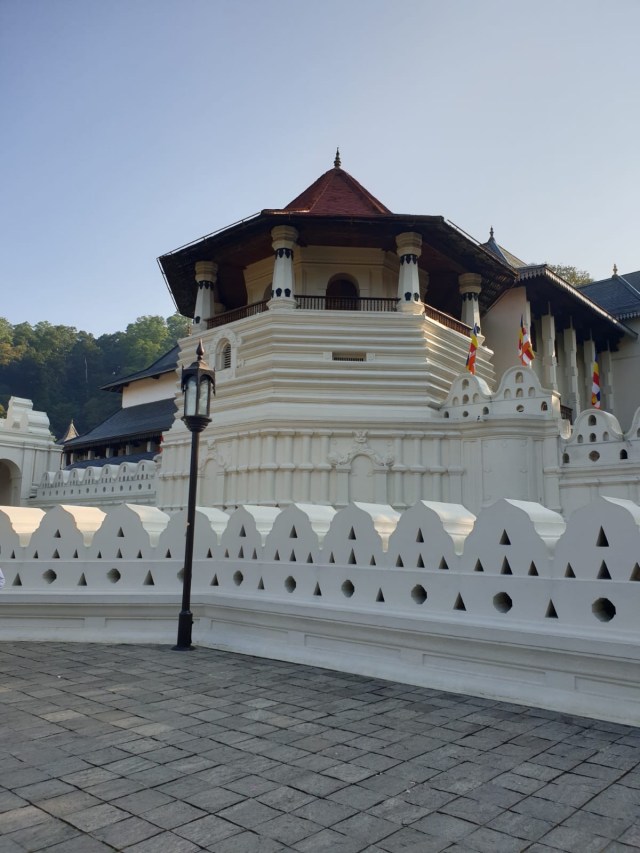
The tooth relic was believed to belong to Buddha which is the reason for its importance. Although disappointingly you cannot actually see an ancient tooth and will only see the structure in which it is housed. The outside of the temple was definitely not the most remarkable, however inside it is more intricately decorated. It is well loved by the Sri Lankan’s and it was obvious to see just how much religion means to the majority of them.

Udawatte Kele Sanctuary

We stumbled on this nature reserve completely by accident. We were attempting to locate a view point marked on our maps but instead we somehow managed to climb up through a military base. The path wasn’t very well marked and so we just kept following the slightly ‘rustic-looking’ steps. Eventually we did reach a viewpoint but we had managed to bypass the entry point in to the sanctuary. This meant the reserve worker was very confused as to how we had got in without a ticket. Eventually we understood that we were meant to pay something and paid the entry fee of a very specific 661.25LKR per person. This was definitely worth every penny.

It was huge and it was fairly confusing where you were as the signposts were only really in Sri Lankan but it was beautiful. We saw a lot of toque monkeys which get a little too close for comfort and look like they could deliver a nasty bite if they wanted. We were also lucky enough to spot some wild pigs and deer. It was very quiet and there were barely any tourists to be seen.

Geragama Tea Factory

This was one of the tea factories outside Kandy (of which there are many.) Any taxi/tuk tuk can easily take you to one of these factories, wait there for you, and drive you back.

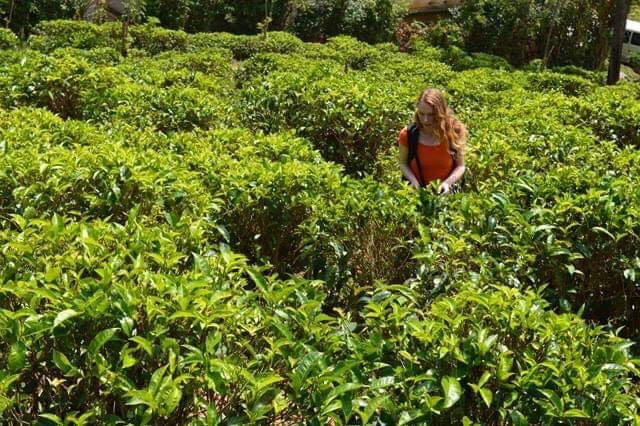
Once there we were given a free tour of the factory and an explanation as to the different processes involved in making tea. We were then given a free cup of tea and some biscuits at the end so it was a very cheap activity! You were then given the opportunity to buy some tea from them if you wanted to. Silver tip or gold tip tea is the most expensive as it is the purest and has lots of health benefits (which they repeated multiple times along the tour to ensure we knew about this when it came to buying the tea!) Although at 6000LKR per packet it doesn’t come cheap.

Where to stay:

Sevana City Hotel

This hotel was really good. The room was huge and very comfortable. Staff were friendly. It was right in the centre so easy walking distance to all the sights in Kandy. The rooftop pool was also an added bonus to escape from the afternoon heat. Can’t really fault it, although it is a bit pricey at $72 per night for a double room.

Food:

Muslim Hotel & Restaurant

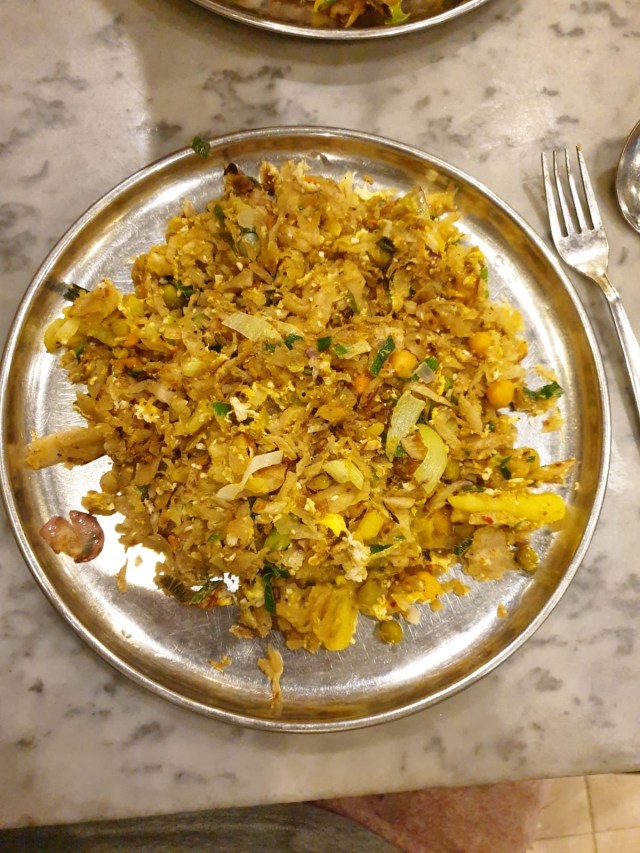
On the main road in Kandy people are drawn into this restaurant as there is someone outside making Kottu which is very interesting to watch and very tasty to eat. Kottu was our favourite Sri Lankan meal by far.

Spicy Food Court

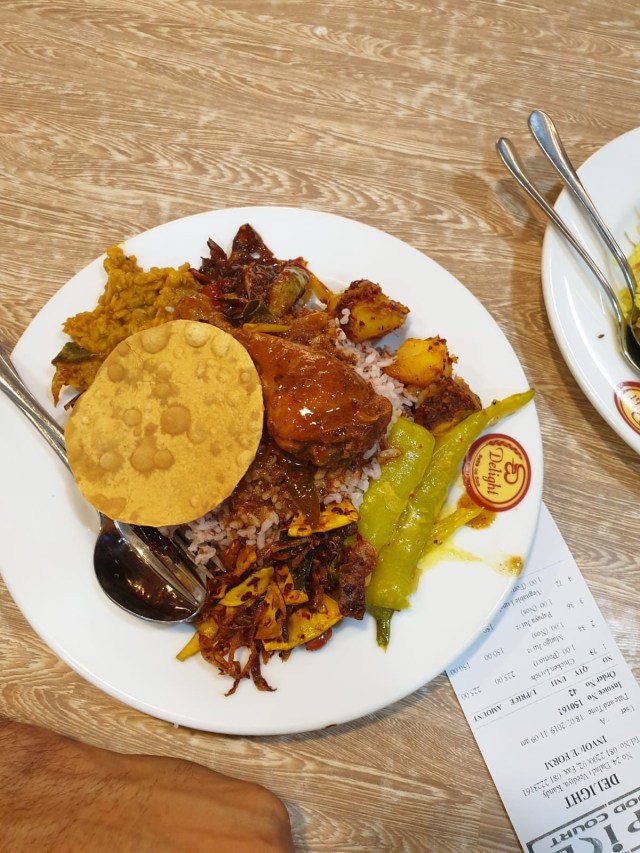
A small food hall that looks very unexciting but did a great Sri Lankan curry and was very cheap. We paid only 675LKR for 2 huge plates and 2 papaya juices.

Would I go back to Kandy? Probably not. Was I glad I went? Definitely. A lot of the Sri Lankan towns are filled with tourists which Kandy is most certainly not and so perhaps gave one of the best representations of a true Sri Lankan city. However, it was noisy, busy, not overly attractive and didn’t have too much to do. Udawatte Kele Sanctuary was definitely the highlight.

Photo credz @nigz69740

Machu Picchu

Journey:

To get to Machu Picchu there are 3 different options.

1. Hike the Inca trail. It was a bit out of our price range and something you had to book quite far in advance but it looks amazing. On the bucket list for next time.

2. Train from Cusco. Two companies run trains daily from Cusco (or more specifically Poroy – about 30 minutes taxi drive from Cusco.)

The two companies are Perurail and incarail and the train tickets cost a bomb, and that was just for the cheapest tickets. It was about $100 per person for a one way ticket. Also, these sell out way in advance so if you miss your train you can’t just get the next one. On the plus side the scenery is beautiful and it only takes about 3 hours for you to arrive in the town of Aguas Calientes.

3. Bus from Cusco. I saw packages for a 2 day trip to Cusco taking the bus/hydroelectrica. This was the cheapest option but also the most time consuming.

Accommodation:

Casa Machu Picchu. The one and only dorm we stayed in on our trip to South America. I remembered that I dislike dorms, but everywhere in the town was very expensive so there was little alternative here. The breakfast was good though and started at 5am so you could get to Machu Picchu early.

Our day at Machu Picchu:

We woke up at 4:30 am and had breakfast at 5am. We got in line for the bus at 5:30am but that was still too late to avoid the queues. It’s a serious queue to get the bus.

Huayna Picchu

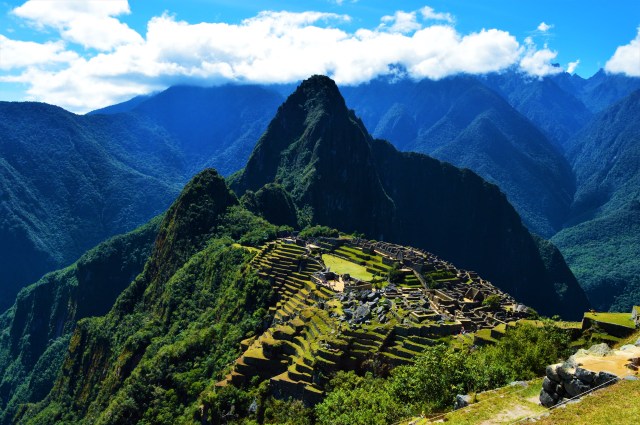
We had paid for the extra ticket to tackle the mountain of Huayna Picchu (in the classic picture of Machu Picchu, Huayna Picchu is the big mountain in the background.) It’s quite a steep climb and Thomas turned around due to his fear of heights (there are some paths that are very steep, unsafe, and not really suitable for those afraid of heights.)

However, this was my favourite part of Machu Picchu and well worth the extra money. There’s far less people climbing up this part (200 at a time, rather than the 2,500 in the rest of the area of Machu Picchu), therefore it feels much more quiet and calm and far less touristy. You can also appreciate the awesome view of Machu Picchu from up high and from a different angle to the normal view. The climb wasn’t too bad and in all it took just under 2 hours to get there and return. Would definitely recommend getting the extra ticket for this (as long as you like heights.)

The Sun Gate

If you hike the Inca trail the sun gate is where you get your first jaw dropping view of Machu Picchu. However, for those not hiking the Inca trail you can still walk up to the sun gate which gives you some great views of Machu Picchu. (It’s also a bit less scary than the Huayna Picchu climb and you don’t have to pay any extra.)

IMG_1719

Machu Picchu itself

When you first enter the main site to get the classic postcard photo you have to first climb to the Funerary Rock located on the top of the hill. The steps then wind down into the site giving multiple different viewpoints (with lots of llamas.)

Be sure to see the Temple of the Sun, Sacred Plaza (home to the Temple of the Three Windows), the Intihuatana, and Temple of the Condor. Even if you have no idea what any of the buildings are the sheer quality of the stonework is still awe inspiring. How the Incas managed to create this perfect architecture without wheels, without a crane, without anything is incredible.

History:

The actual function of Machu Picchu is not known. It has been argued to have been used as a military fortress, for religious purposes and also as a royal residence. The existence of Machu Picchu was only rediscovered and made public knowledge in 1911 by the American Hiram Bingham who stumbled across it during his search to find the lost city of Vilcabamba. There are still lots of mysteries surrounding Machu Picchu, which just adds to its intrigue.

Food:

Everything in Aguas Calientes is overly priced. Everything. However, the food at Machu Picchu itself is even more expensive, so although your ticket says you can’t bring food or drink in ignore this you can. We bought a sandwich each from a bakery in town for about S.10 and some water. We also stocked up on coca sweets to combat any altitude sickness (they’re also pretty yummy too.)

Summary:

The highlight of the trip. Machu Picchu is one of the seven wonders of the world and it’s not hard to see why. How the Incas managed to build this is beyond me, it’s an incredible architectural structure built high in the clouds. Yes there are lots of tourists but it doesn’t get in the way of how awesome this is. Definitely one of those places to see before you die.

Cusco and a lot of ruins

Journey:

Maybe the worst journey ever. The bus was about 12 hours and there was only one option leaving at 09:00 for a mere S.30. However, we made the poor decision to drink numerous Pisco sours the night before which meant the whole bus journey felt like death. Actual death.

Accommodation:

Atawkama Hostel. Not the best hostel. Cusco was very cold and the hostel had a kind of open backyard area where the rooms were. This meant the rooms were very cold as there was very little between them and the outside.

Sights/activities:
To visit most of the archaeological sites in Cusco you need an official tourist ticket. This costs S.130 and includes entry into 17 sites (to use within 10 days.) You can’t visit any of the sites without this ticket (or buying the partial one day ticket for S.70.) We saw a lot of ruins in Cusco so I’ve separated them up into sights within Cusco, around Cusco and in the Sacred Valley.

In Cusco:

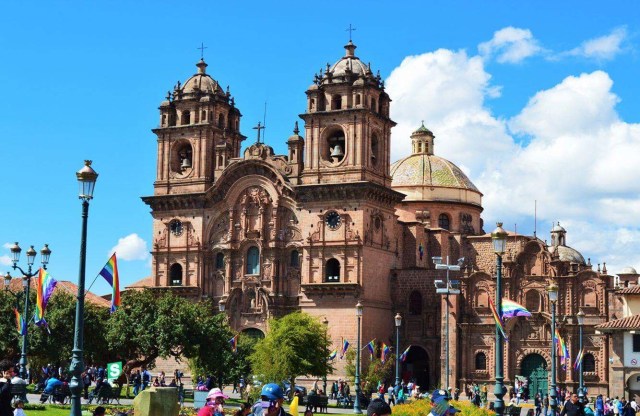
Plaza de Armas

Another beautiful central square, with some impressive architecture. Lots of the rainbow coloured Tahuantinsuyo flags decorate the square.

IMG_1763

Choco Museo

It’s free. There’s also free chocolate. They’re meant to be samples. We just took handfuls. Oops.

Qorikancha

Inca ruins right in the centre of the city. We walked past the entrance for this several times – basically Qorikancha is also the convent of Santo Domingo. Qorikancha was the richest temple of the Inca Empire and some of the stonework still remains, later on the Santo Domingo convent was built over the top. This is not included in the tourist ticket but it’s still worth paying for this.

Iglesia de San Blas

Walk uphill to find this church and square. The church itself was pretty but not overly impressive (i.e. not worth paying for) but the square and streets surrounding it are some of the nicest in Cusco. Watch out for the famed inca street with the 12 sided stone.

Around Cusco:
To see the sites around Cusco we got a taxi for S.20 to the furthest site of Tambomachay and from there walked to Puca Pucara, Sacsayhuaman, Cristo Blanco and Q’enko before making our way back down into the city.

Sacsayhuaman

Most likely to have been a ceremonial centre with areas dedicated to the moon, lightning and stars. Some people argue though that it was a fortress due to the huge rocks that form a sort of zig zag wall (and I do mean absolutely huge rocks – see pictures.) The Spanish eventually captured Sacsayhuaman and after this battle the Incas were basically defeated and fled to the jungle. Check out the slides made of rock and the tunnels. There are a few tunnels remaining at this site which were thought to link throughout Cusco and other areas of the Inca Empire. Try and get through them without using a light – it’s a real challenge.


Q’enko

Believed to be a place where sacrifices and mummifications took place. There is an altar underneath the rocks that’s the most interesting point.

Puca Pucara

Situated on a hill overlooking the valley. This was thought to be a checkpoint where travellers may have stayed before entering or leaving Cusco, as well as a military and administrative centre. It is translated as the Red Fort due to the reddish colour of the bricks.

Tambomachay

A site for ritual bathing, most likely for just the use of the nobility. Not many people seemed to visit here at all, but perhaps not the most interesting of the ruins.

Cristo Blanco

A mini Christ the Redeemer this was actually a gift from Arabic Palestinians who took refuge in Cusco during World War II and towers over the city at about 8m high. Worth combining with a visit to Sacsayhuaman as they are right next door to each other. There’s great view over Cusco from here.

Sacred Valley:
To see the sacred valley ruins we opted to use a tour company as the only other way to see them would be to hire a taxi (which would have been too expensive.) This cost us S.48 and included a guide which was quite useful as he provided some good information. Salinas de Maras was not included in the tourist ticket and cost S.10.

Salinas de Maras (salt mines)

The locals run water into the pools, then drain it and the remaining water in the bottom is left to evaporate. Salt is then left behind. This process takes about a month. There are approximately 3000 pools here and it’s quite an impressive sight. The Incas were using this same technique hundreds of years ago at these salt mines in order to produce salt.

Moray

This was sort of an agricultural testing centre where the Incas tested various crop growing techniques due to the different levels they could test which crops grew better at which climates. (The deepest part being the hottest and the temperature dropping as the circles moved outwards.)

Ollantaytambo

This was believed to have once been a country retreat for the Inca nobility and royals. It was also the scene where some of the last battles between the Inca and Spanish took place. Opposite the ruins is a large mountain with the face of a warrior (which is actually quite easy to spot). The mountains were of huge spiritual importance to the Incas who believed them to be very much alive.

Pisac

It is uncertain what the exact function of Pisac was but there are examples of all types of architecture. There are a huge amount of terraces here for agricultural purposes. There are temples at the top of the complex suggesting it was used for religious reasons, and imperial architecture indicates it was maybe a royal residence too. However, it is thought to have originally been used as a military garrison.

One of the most interesting points here is to the West lie a lot of holes in the mountainside, which doesn’t seem overly exciting, but these were used to house mummies – about 3500 (who were treated by the Inca people as if they were alive – they were fed and looked after as if they were still human.) This is one of the largest Inca ruins and whilst at Machu Picchu you have another 2500 people to contend with, here there were maybe another 100 or less.

Food:

Quinoa everything.
We found the best restaurant selling quinoa burgers for S.10. They were amazing. Unfortunately, on our last day they were closed which meant we were hugely disappointed and spent an hour wandering around Cusco trying to find a replacement quinoa burger.

Summary:

Peru had just got better and better. Cusco is steeped in history and the ruins surrounding Cusco and lining the sacred valley are hard to forget (whilst they’re not Machu Picchu they still show off the Inca people’s impressive architect skill.)

Also, a point to note, the rainbow flag is the Inca flag not the gay pride flag (as we mistakenly thought.) One other fun fact -although I’ve referred to the people as Inca, this is not strictly correct. The Inca were actually just the Kings, the people should be referred to as Quechua.

Arequipa and the Colca Canyon (plus some Pisco sours)

Journey:

This was our longest journey yet. We had a 17 hour bus journey from Lima to get to Arequipa. We left at 15:00 and arrived at 08:00 the next morning. The journey wasn’t too horrific as we had paid for a nicer bus (S.115) with the company TEPSA. We had reclining seats, blankets, pillows, free supper and drinks. It could definitely have been a lot worse. Thomas also got a compliment from a slightly crazy old lady sitting in the seat opposite who said he had a lovely nose.

Accommodation:

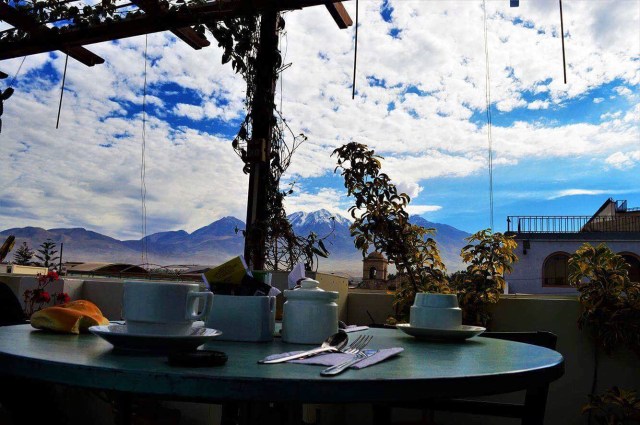
Le Foyer Hostel. Located very close to the main square which was a big positive. However, this was also a negative as it was very near to all the bars and so was impossibly loud at night. The roof terrace was a nice touch though and at breakfast you had a great view of the mountains overlooking the city.

IMG_1588

Sights/activities:

Colca Canyon

There are a huge amount of Tours leaving each day to the Colca Canyon from Arequipa. There are one day tours, two day tours, and trekking tours. In the end we opted for the one day tour as we were short on time.

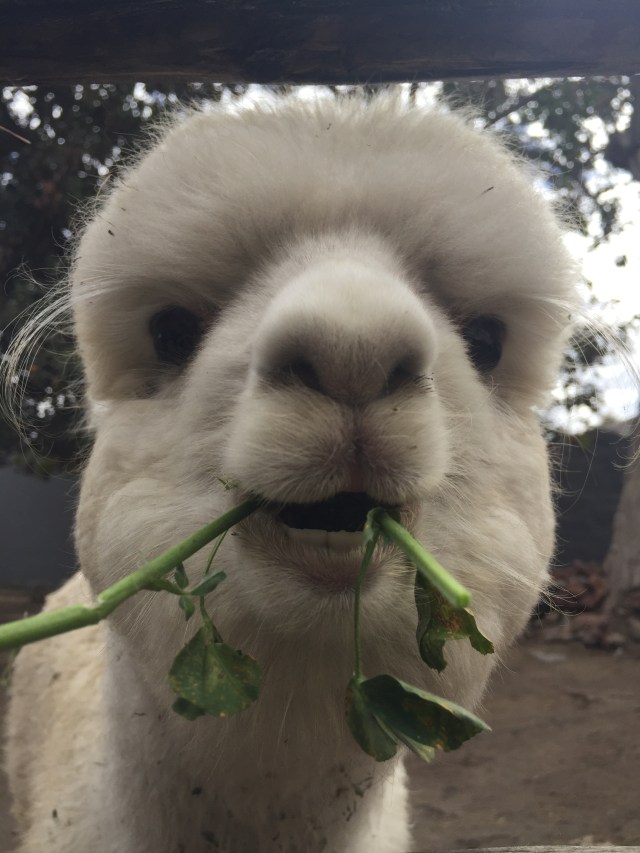
We were picked up from our hostel at 3am to embark on the 3 hour journey to reach the canyon. After a breakfast of bread and jam and some sort of quinoa drink, we then visited a small town where we got to cuddle lots of baby alpacas (in true tourist style.)

The next stop was the canyon itself where we spotted some enormous condors flying around the top. The canyon is one of the deepest in the world at 3,270m (the Grand Canyon has a depth of 1,857m.)

We then were dropped at a hot springs, the price of which was not included in the tour. It was another very touristy stop, and a not very impressive stop at that. (Although it was optional.) Our lunch consisted of a buffet meal (again not included in the price) but somehow we only managed to get away with paying for one not two.

The scenery on the drive back was beautiful and consisted of a national park where we spotted alpacas, llamas and vicuña (which is kind of a wild alpaca.)

This tour cost S.45 each (and another S.70 each for the price of entry to the canyon) and packed a lot into a short space of time. For us, it was the most convenient way to see the colca canyon as we didn’t have a huge amount of time, but for those that have a few days to spend here a trek or a stop in Chivay would give you more time to see more of the very beautiful canyon.

Be warned it’s high altitude (at one point you stop at 5,000m to see some of the mountains in the area.) I walked uphill for maybe ten minutes and thought I might faint (pretty sure it was from the altitude not my lack of fitness anyway.) I was restored with some water and m&ms when I reached the top but to prevent altitude sickness there are pills or coca tea (or coca sweets which I discovered later.)

Plaza de Armas

One of my favourite squares in Peru. Beautiful white buildings and a grassy centre, with the vast cathedral sitting along one side. Great for people watching.

Museo Santuarios Andinos

This museum tells the story of Juanita, the 12 year old Inca girl sacrificed in the 1450s atop a mountain. It starts with a video, followed by a tour showing some of the things found with Juanita (and other sacrificed children) in the area. Finally, it ends with Juanita herself who has been preserved in a refrigerator. A very interesting museum, one of the most interesting we have been to in the whole of South America. (But maybe we’re kind of morbid as the mummified body was the major reason this was so interesting to us.)

Mundo Alpaca:

It’s not a big museum but you can go visit and feed some llamas and alpacas, (for FREE) as well as see some people making some traditional clothes from the hair. There’s a shop on site selling alpaca products but it’s very expensive. There are far cheaper places selling alpaca clothing throughout Arequipa and you can negotiate them down quite a lot.

IMG_1522

Food:

Tacos and Tequila

We had an amazing meal just below our hostel at a Mexican restaurant (as you can guess by the name.) It’s fairly inexpensive and has tasty tacos, burritos, enchiladas, and a whole range of Mexican food. We had these along with the Peruvian Pisco Sour drink (which is delicious but dangerous.)

Argentina empanadas

Normally the empanadas we had come across in South America were filled with either cheese, chicken or meat. Here we found some different varieties, with our favourite being the Argentina empanada which was meat and potato.

Queso Helado

A kind of traditional creamy ice cream sold on practically every street corner in Arequipa. There is lots of other ice cream for sale too (despite the cold weather), our favourite is ron con pasas (rum and raisin.)

Drinks:

Casona Forum

5 different clubs/pubs in one. They like to play lots of latin music on the bottom floor so after a while we moved to the 80s level (where the 60 year olds were hanging out) where it was much more fun. It cost S.25 to enter the 5 different levels or you could pay S.75 to be VIP which gave no benefits but allowed you to stare at people from the floor above.

Pisco sour

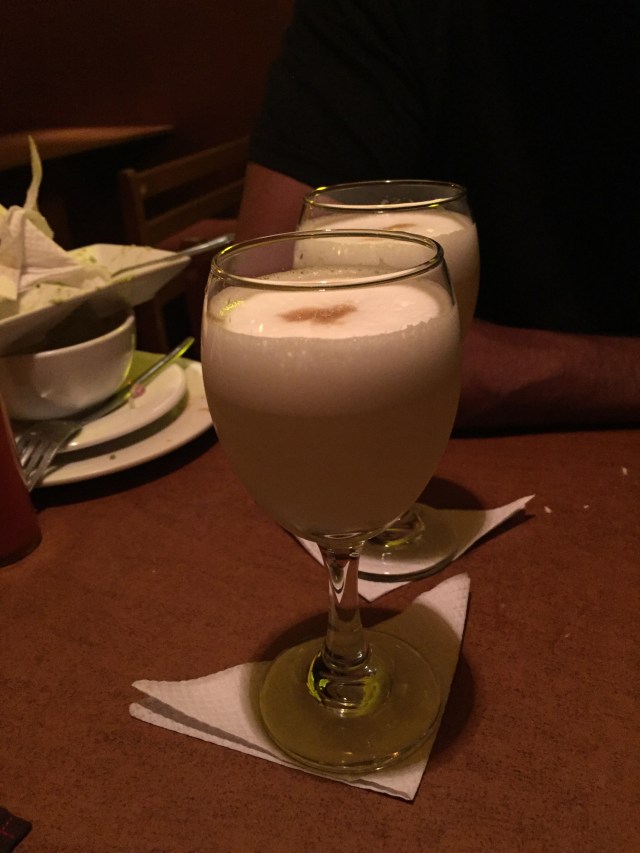
Pisco, lemon and egg whites. Whatever Pisco is it’s a killer. 3 cocktails was enough to give me one of the worst hangovers of the trip (coinciding with a 12 hour bus journey.) The drink tastes amazing though.

IMG_1583

Coca tea

Arequipa isn’t too high in comparison to some areas of Peru but altitude sickness can still occur (especially on a trip to the canyon) so the locals chew on coca leaves to prevent this. We had coca tea for the first time here and it kind of tastes a little like green tea. Definitely worth a try to prevent altitude sickness anyway.

Summary:

My favourite place so far in Peru. From my very negative feelings at the start in Mancora, the South of Peru was definitely turning those feelings around. The picturesque Arequipa was lovely and the Colca Canyon blew me away with it’s wonderful views and condors flying everywhere. Hopefully Peru would get even better with our last stops in historic Cusco and Machu Picchu.

Lima: the capital surprise

Journey:

We paid S.30 each for our journey from Trujillo to Lima. We were told it would take about 8 hours but this was nearer to 11 in the end (as usual add on at least 2 hours to the time they say.) The price was very cheap for such a long journey (the company was Linea), however the bus had blacked out windows so you couldn’t see outside. For such a long journey it would have been nice to look out the window, even if all you could see was desert.

Accommodation:

Kaclla: The Healing Dog Hostel. Lima is much bigger than I first thought and we chose to stay in the Miraflores area. This is definitely the wealthiest part of Lima and it feels very safe, clean and pretty. However, it is also the most expensive area and to get into the centre it takes about half an hour.

The hostel we stayed at was really nice, it wasn’t big but had a good TV room, well stocked kitchen and a yummy breakfast (basically I just want to eat the homemade peanut butter all day long.) Also, there is a resident Peruvian hairless dog who has a lot of character and likes to stare at you until you give him some food. (I do that to Thomas all the time.)

Sights/activities:

MALI: Lima Art Museum

This was a pretty expensive S.30 each (the same price we had just paid for a bus journey) but having heard good things about it we decided to go along with this. We shouldn’t have. It just contained a lot of pottery which I can safely say is really not very interesting after a while.

Surfing

There’s plenty of surf spots just a short walk from Miraflores, and more further down the coast. Waikiki beach is perfect for beginners, although equally the water is cold – wetsuits are definitely needed.

San Francisco monastery

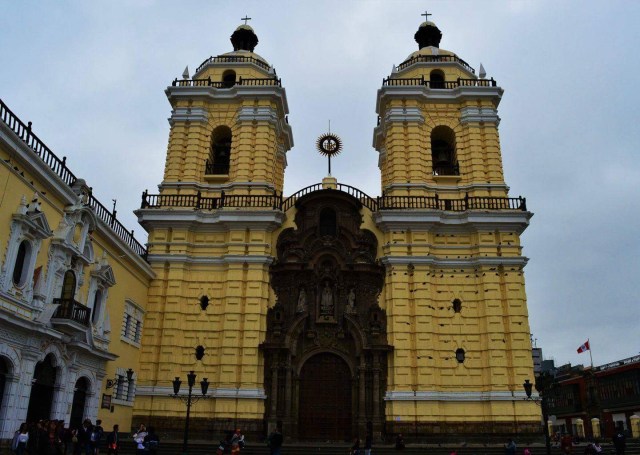
We hadn’t really planned to come here and sort of accidentally stumbled across it, but it’s by far one of the most interesting things to see in Lima. It’s only S.10 each and inside is the old monastery of the San Franciscans. Key features are the old library with an abundance of books, and the catacombs which are home to a lot of human remains (only surpassed by those in Paris.)

IMG_1446

Huaca Pucllana

This is a pyramid construction by the Lima culture (located in Miraflores), with the purpose of being an administrative and ceremonial centre.

A lot of the site has been restored and burial grounds have been found onsite. These burial grounds were from the Wari people, who took over the site later on and used it to bury important people.

It costs S.12 per person and includes a guided tour in English (or Spanish.) It was a worthwhile visit and considering it was built in 500 AD contains some very impressive architecture.

Plaza de las Armas (Plaza Mayor)

Lima’s historic central square contains the Presidential palace, La Catedral and other notable buildings. It is one of the grandest central squares I have seen in South America and is very bright (and yellow.)

Food

Food is very expensive in Miraflores – To give a rough idea it was S.20 for a small bowl of pasta – so we ended up cooking at our hostel more often than not. On the other hand, in the centre food was a lot cheaper and it was S.8 for a drink, soup, and a main.

Summary

Lima was a surprise. A good surprise. I had heard very negative things but I thought it was one of the better capital cities we had been to. The attractions were a little lacklustre but the San Francisco monastery was a highlight.